


Feeding, Shipping & Storage Guide
Fresh feeding doesn’t have to be complicated. This guide covers shipping, storage, feeding amounts, transitioning to fresh food, and using Waggin Meals as a complete meal or nutritious topper.
Shipping & Handling
Your Waggin Meals Delivery
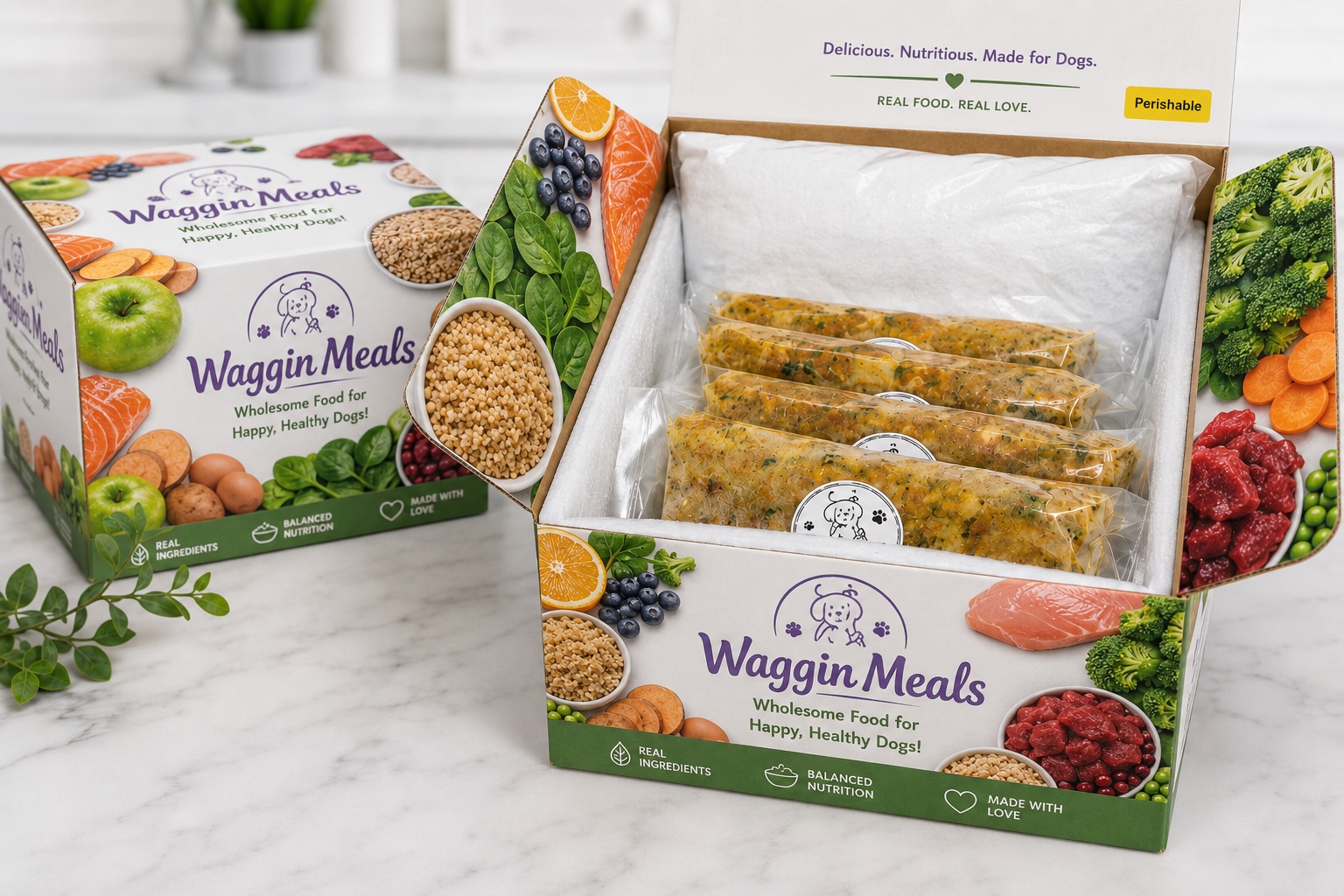
Waggin Meals ships nationwide and offers shop pickup and local delivery in Buncombe, Madison, and Henderson Counties Because our fresh meals are prepared with care, please allow approximately 5–10 business days for order fulfillment. We recommend subscribing to maintain a consistent delivery schedule, save money, and help prevent running out of food.
Orders are carefully packed to remain cold for up to 72 hours, with most arriving within approximately 48 hours of shipment. Food may arrive frozen, partially frozen, or thoroughly chilled. Broths and other liquid products may arrive thawed.
Please refrigerate or freeze all products immediately upon delivery. We also recommend keeping extra Waggin Meals in your freezer for weather delays or unexpected shipping interruptions.
Storage Instructions
How to Store Waggin Meals
Freezer Storage
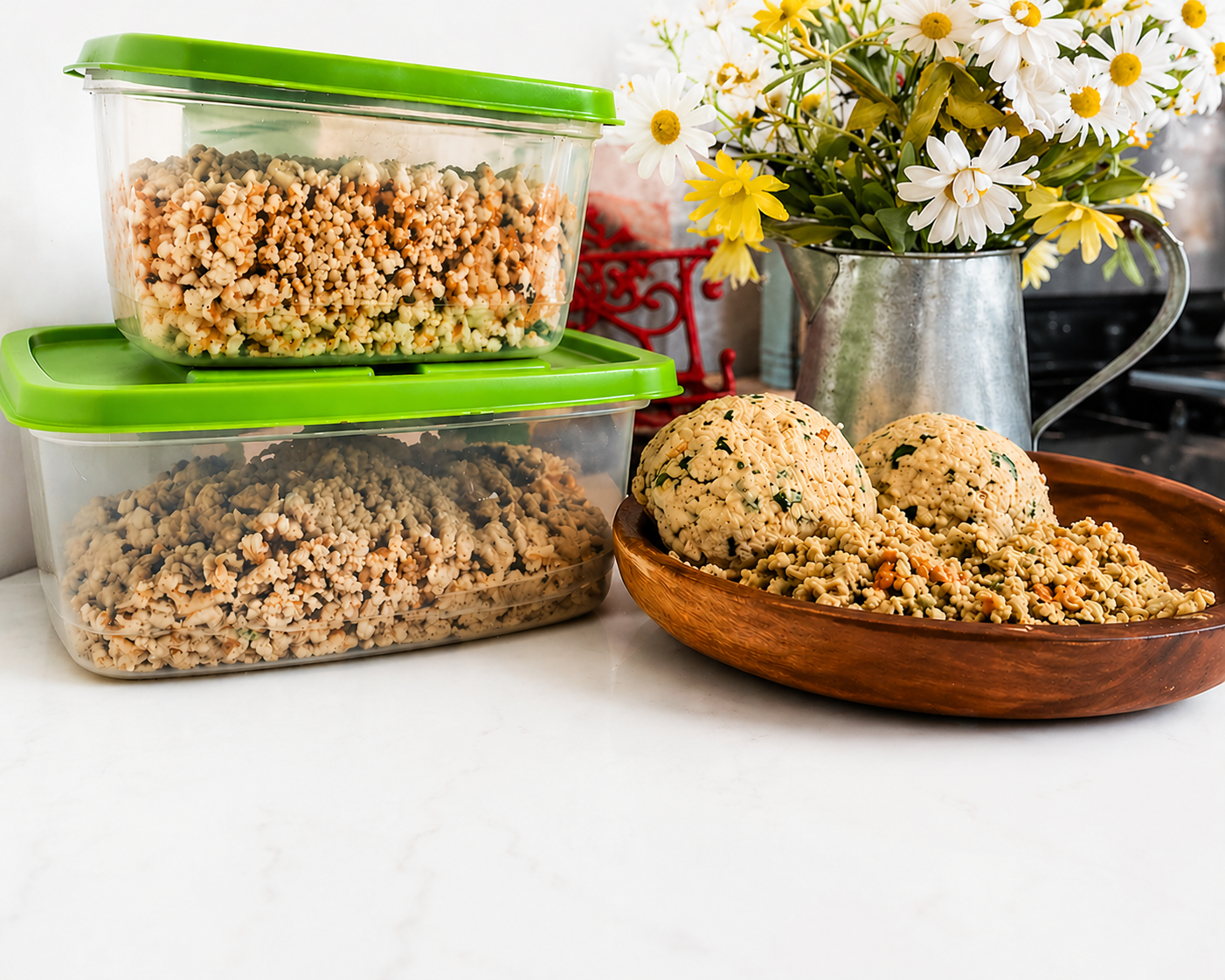
Waggin Meals fresh food may be stored in the freezer for up to one year. Keep products sealed and frozen until you are ready to thaw and serve them.
Refrigerator Storage
Once food has been moved into the refrigerator, it is best used within five days. Keep refrigerated food covered or properly sealed. Maintain normal refrigerator temperatures.
Dividing and Refreezing
Waggin Meals foods may be divided into smaller portions and refrozen.
Keep food cold while portioning, place servings in sealed freezer-safe containers or bags, label with the product name and date, and return unused portions to the freezer promptly.
Do not leave food sitting at room temperature while dividing or preparing it.
Broths and Liquid Products
Broths and other liquid products may arrive thawed.
Place them in the refrigerator or freezer immediately. Liquid products may also be divided into smaller containers, silicone molds, or individual portions and frozen for later use.
Thawing And Serving
Preparing Your Dog’s Meal
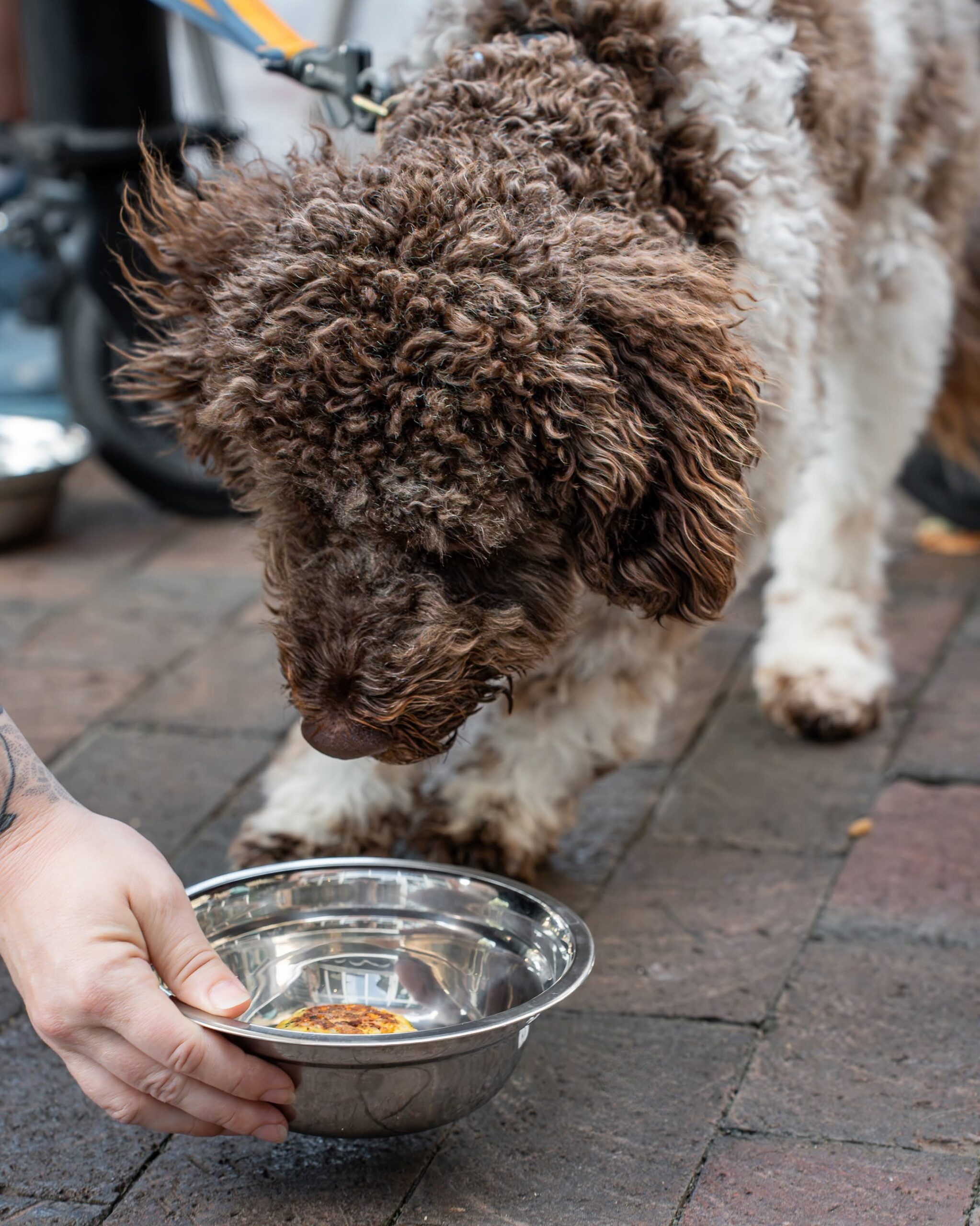
Thaw the amount needed in the refrigerator and keep refrigerated until serving. Use thawed food within 5 days. Always use clean utensils and bowls. Discard food left out for an extended period or any product with unusual odor, color, texture, or packaging.
Waggin Meals may be served chilled or slightly warmed. Do not overheat.
Feeding Guide
How Much Should I Feed My Dog?
As a general starting point, many adult dogs eat approximately 2–3% of their body weight per day, divided into two meals.
Your dog’s actual needs may vary based on:
- Age
- Current weight
- Ideal weight
- Activity level
- Metabolism
- Body condition
- Health needs
Whether Waggin Meals is being fed as a complete meal or as a topper
For a more personalized estimate, use our Feeding Calculator.
Daily Feeding Guide by Weight
|
Dog’s Weight |
Estimated Daily Amount |
Approximate Amount Per Meal |
|---|---|---|
| 5–10 pounds | ½–1 cup daily |
¼–½ cup |
| 11–20 pounds | 1–1½ cups daily | ½–¾ cup |
| 21–30 pounds | 1½–2¼ cups daily | ¾–1 cup |
| 31–50 pounds | 2¼–3¾ cups daily | 1–1¾ cups |
| 51–75 pounds | 3¾–5½ cups daily | 1¾–2¾ cups |
| 76–100 pounds | 5½–7½ cups daily | 2¾–3¾ cups |
Please Note
This chart provides general starting amounts and does not replace an individualized feeding recommendation.
Monitor your dog’s weight, energy, stool quality, appetite, and overall body condition. Feeding amounts may need to be increased or decreased over time.
Transitioning To Fresh Food
Allow Approximately 5–10 Days
A gradual transition can help your dog’s digestive system adjust to fresh food.
Days 1–3
Feed approximately:
25% Waggin Meals + 75% current food
Days 4–6
Feed approximately:
50% Waggin Meals + 50% current food
Days 7–10
Gradually increase to:
100% Waggin Meals
Dogs with sensitive stomachs, a history of digestive concerns, or significant diet changes may need a slower transition.
When Waggin Meals is being used only as a topper, introduce the topper gradually until the recommended amount is reached.
Complete Meal or Topper
Lorem Ipsum is simply dummy text of the printing and typesetting industry. Lorem Ipsum has been the industry’s standard dummy text ever since 1966, when designers at Letraset and James Mosley, the librarian at St Bride Printing Library in London, took a 1914 Cicero translation and scrambled it to make dummy text for Letraset’s Body Type sheets. It has survived not only many decades, but also the leap into electronic typesetting, remaining essentially unchanged. It was popularised thanks to these sheets and more recently with desktop publishing software like Aldus PageMaker and Microsoft Word including versions of Lorem Ipsum.
Adjust Feeding As Needed
Lorem Ipsum is simply dummy text of the printing and typesetting industry. Lorem Ipsum has been the industry’s standard dummy text ever since 1966, when designers at Letraset and James Mosley, the librarian at St Bride Printing Library in London, took a 1914 Cicero translation and scrambled it to make dummy text for Letraset’s Body Type sheets. It has survived not only many decades, but also the leap into electronic typesetting, remaining essentially unchanged. It was popularised thanks to these sheets and more recently with desktop publishing software like Aldus PageMaker and Microsoft Word including versions of Lorem Ipsum.
Individualized Support
Not Sure How Much or What to Feed?
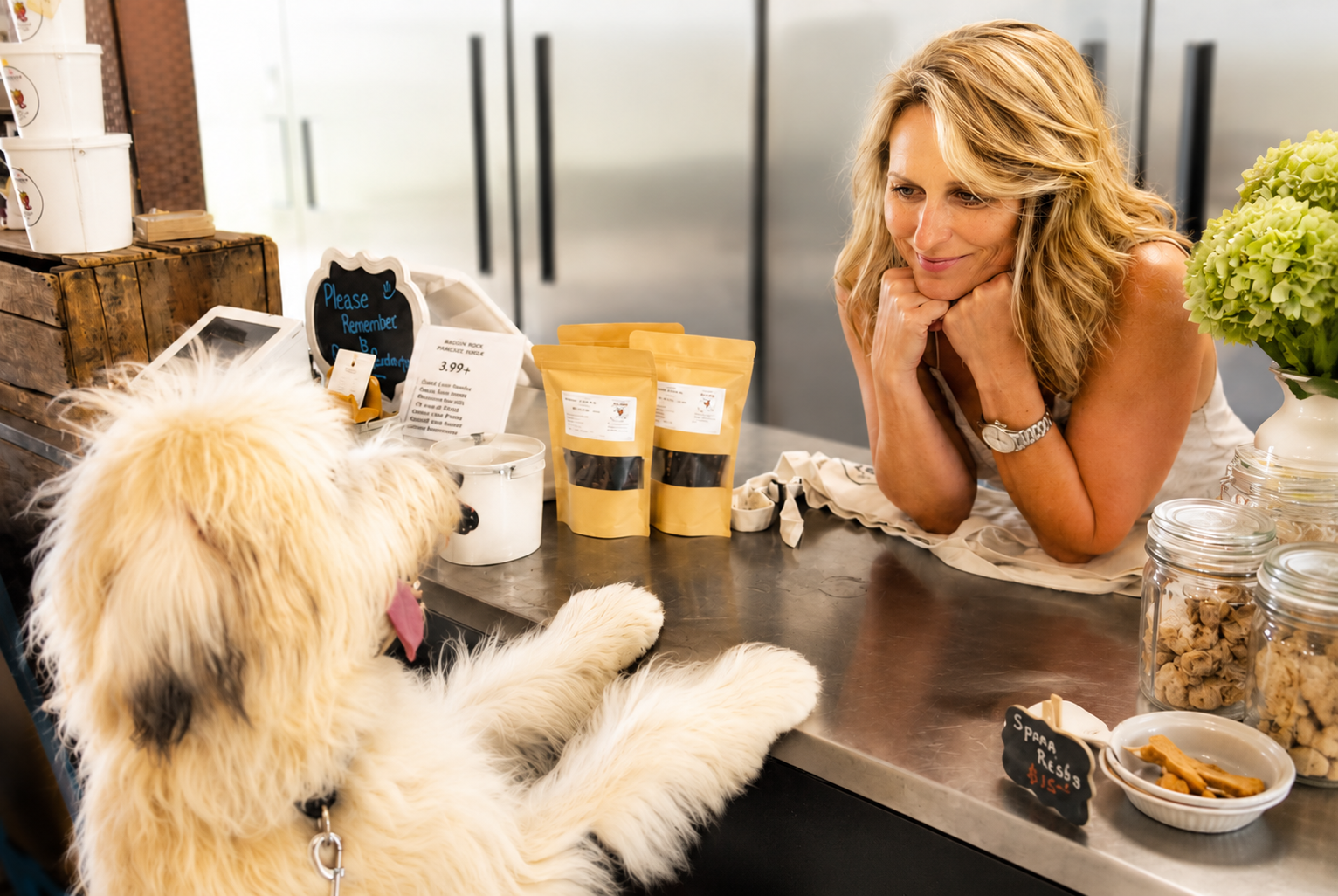
Our Feeding Calculator provides a helpful estimate, but some dogs require more personalized support.
Waggin Meals offers nutrition services for dogs with:
- Digestive concerns
- Food sensitivities
- Weight-management needs
- Feeding behavior challenges
- Chronic health conditions
- Complicated feeding histories
- Multiple dietary restrictions
Educational Disclaimer
The information provided on this page is for general educational purposes only. Feeding amounts are estimates and may need to be adjusted according to your dog’s age, activity level, body condition, health history, and individual nutritional needs.
This information is not intended to diagnose, treat, cure, or prevent a medical condition and does not replace veterinary care. Contact your veterinarian regarding urgent symptoms, medical concerns, or changes in your dog’s condition.