


Understanding pancreatitis in Dogs
Pancreatitis Can Leave Pet Owners with More Questions Than Answers
A pancreatitis diagnosis can be frightening and confusing.
One day, your dog may seem healthy. The next, they may refuse food, begin vomiting, experience diarrhea, appear painful, or require emergency veterinary care.
Many pet owners leave the veterinary office knowing that their dog may need a lower-fat diet, but still have important questions:
This article is intended for educational purposes only and does not replace veterinary diagnosis, treatment, or medical advice. Never change prescribed medications or a therapeutic diet without consulting your veterinarian. Pancreatitis can become a medical emergency.
Pancreatitis occurs when the pancreas, an organ responsible for helping digest food and regulating blood sugar, becomes inflamed.
Some dogs experience a single episode, while others develop recurring or chronic inflammation. Pancreatitis can be mild or severe, and not every dog experiences the same symptoms.
Common signs include:
- Vomiting or diarrhea
- Loss of appetite
- Abdominal discomfort or pain
- Unusual tiredness or weakness
- A hunched posture or reluctance to move
Important: Repeated vomiting, severe pain, collapse, or an inability to keep water down requires immediate veterinary attention.
Nutrition is an important part of pancreatitis management, but every dog has different needs.
A veterinarian may recommend:
- A highly digestible, lower-fat diet
- Smaller, more frequent meals
- Avoiding fatty treats, table scraps, and rich foods
- Monitoring weight and additional medical conditions
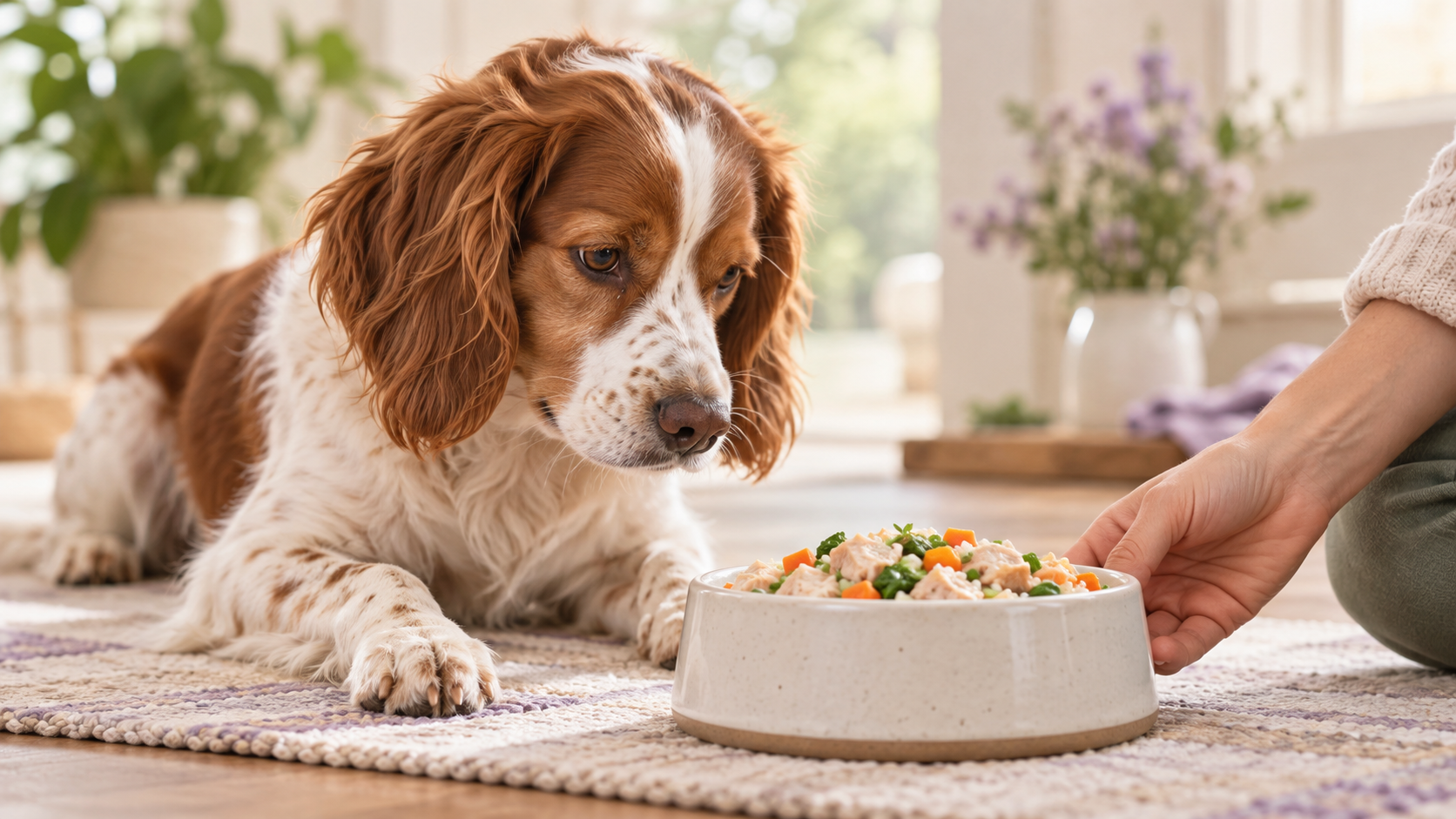
Yes, a carefully formulated, gently cooked diet may be an option for some dogs. However, fresh food is not automatically suitable for pancreatitis.
Total fat content, digestibility, nutritional balance, and individual medical history matter. Follow your veterinarian’s feeding and treatment instructions, particularly during an active episode.
A Note from The Dog Food Lady™
One of the biggest misconceptions about pancreatitis is that one particular food must have caused it. Sometimes dietary choices contribute. Other times, the cause is far more complicated—or remains unknown.
I believe in looking at the whole dog, not just the diagnosis. Understanding your dog’s medical history, nutritional needs, lifestyle, and current diet allows us to make better-informed feeding decisions alongside veterinary care.
The goal isn’t to choose between fresh food and prescription food. It’s to choose what’s appropriate for your dog.
The Dog Food Lady™